
 Whatsapp Us

Ask ten people what a Persian costs here and you will get ten different answers, because the number genuinely does move that much. Pedigree papers, age, coat colour, and who you buy from can change the figure several times over.
So rather than hand you a number that may be wrong by the time you read it, this guide does something more useful. It explains exactly what drives the Persian cat price in Dubai, so you can judge any quote you are given, and then covers the part most buyers underestimate: what a Persian costs to keep, month after month, with real current prices.
It also covers the health checks worth making before money changes hands, which matter far more than saving a few hundred dirhams at the start. Every figure below is priced from the cat range we actually stock.
Quick Answer
There is no single Persian cat price in Dubai. It swings widely with pedigree registration, age, coat and whether you buy from a registered breeder, a pet shop or a private rehoming.
We do not quote a purchase figure here because we do not sell cats and will not publish a number we cannot stand behind. What this guide gives you instead is every factor that sets the price.
The running cost is the bigger number over a cat's life, and Persians cost more to keep than most breeds because of the coat, the eyes and the flat face.
Health screening matters more than price. Ask about polycystic kidney disease testing and breathing before you ask about discounts.
Adopting is a genuine alternative, and Persians and Persian crosses do come up in UAE rehoming.
What Decides the Persian Cat Price in Dubai
Understanding these lets you work out whether a quote is reasonable, which is more useful than a number from a page written last year.
- Pedigree registration. A cat with verifiable registration papers from a recognized body costs considerably more than one sold as a Persian with nothing to prove it
- Health testing of the parents. Breeders who screen for hereditary conditions carry that cost and price accordingly, and it is money well spent
- Age. Kittens are priced highest. Adults and retired breeding cats are often far less
- Coat colour and pattern. Some colours are in higher demand than others, which shows up directly in price
- Face type. Flatter faces usually cost more, even though they carry the most health risk. This is worth understanding properly before you choose, and it is covered below
- Who is selling. A registered cattery, a pet shop and a private owner rehoming a cat are three very different propositions
- What is included. Vaccinations, microchipping, neutering, a vet check and a health guarantee all have real value
- Import versus locally bred. An imported cat carries shipping, permits and quarantine arrangements in its price
The single most important line item is health testing, and it is the one buyers most often trade away to save money. A cheaper untested cat can become the far more expensive option within two years.
Why we do not publish a figure
We sell pet food and supplies, not cats. We have no first-hand pricing data on live animals, and we are not willing to repeat a number from elsewhere and present it as fact.
What we can give you is verified, because it comes from our own shelves.
Doll face or peke face, and why it matters more than price
Persians are commonly described in two broad types, and the difference affects both what you pay and what you deal with for the next fifteen years.
The traditional or doll face Persian has a longer, more defined muzzle, closer to the breed's older look. The nose sits lower on the face, and the airway is less compressed.
The peke face or flat face Persian, sometimes called punch face, has the heavily shortened muzzle most people picture. The nose sits high between the eyes.
The flatter type usually commands a higher price because it is the look in demand. It is also the type most affected by breathing difficulty, tear overflow and jaw problems, because all three come from the same compressed anatomy.
If you are choosing, a less extreme face is the easier cat to live with. That is not an aesthetic opinion; it is about how comfortably the cat breathes, eats and drains its tears.
What a Persian Actually Costs to Keep
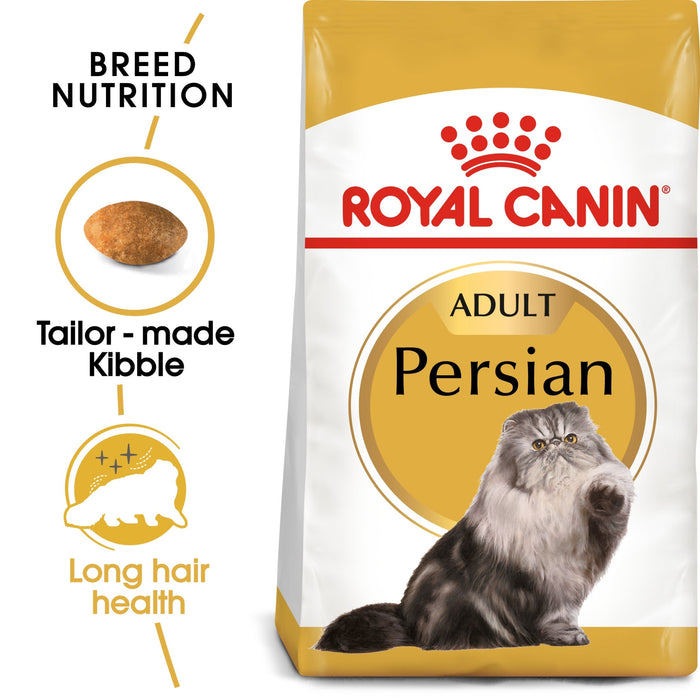
This is the number that matters over fifteen years, and it is where Persians differ most from an ordinary domestic cat.
These are real prices from our own product pages, correct at the time of writing. Check the product page for the current figure before you budget, since prices do change.
| What you will be buying | Pack | Price |
|---|---|---|
| Breed-specific adult food | 10 kg | AED 254.50 |
| Breed-specific kitten food | 2 kg | AED 148.89 |
| Breed-specific wet food | 12 x 85 g | AED 94.80 |
| Long hair indoor formula | 2 kg | AED 156.00 |
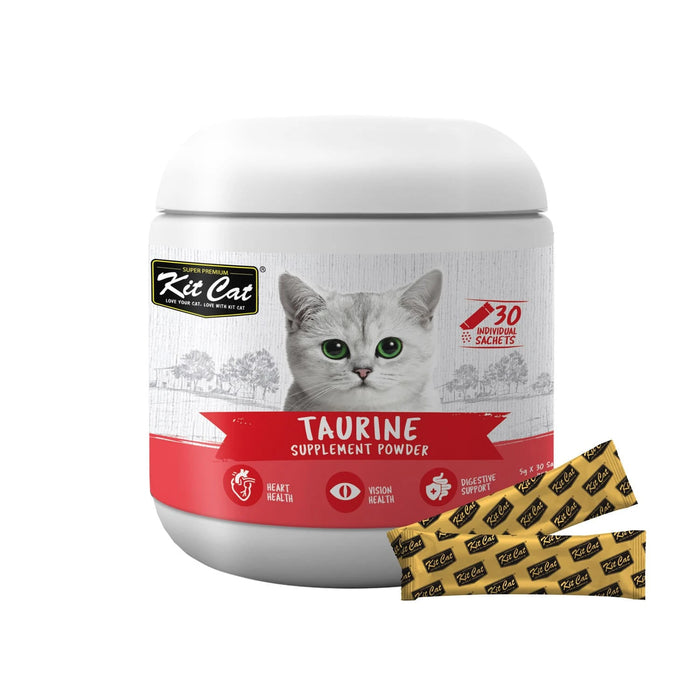
| Tear stain supplement | 150 g | AED 80.00 |
| Cat litter | 6 kg | AED 45.00 |
We have deliberately not multiplied these into a monthly total, because how long a pack lasts depends on your cat's weight and the feeding guide on the pack. Work it out from the guideline for your own cat rather than from an average.
On top of the above, budget for veterinary care, vaccinations, parasite prevention, grooming tools and, if you want it, insurance. Current pricing is on the cat food range.
Why breed-specific food exists for this cat
Persians have an unusual jaw and a flat face, which makes picking up ordinary kibble awkward. Breed formulas use a kibble shape designed to be easier for them to grip, and add fiber to help move swallowed hair through the gut.
It is not essential, and plenty of Persians do fine on good general cat food. Our guide to the best cat food covers what to compare on any label.
The Grooming Commitment Nobody Mentions in the Price
This is the single biggest reason Persians end up in rehoming, and it is worth being blunt about before you buy.
A Persian needs brushing every day. Not weekly, not when it looks untidy. Daily. The coat is long, dense and fine, and it mats close to the skin faster than most owners expect.
A matted Persian is not a cosmetic problem. Mats pull on the skin constantly, trap moisture and heat, and in bad cases have to be shaved off under sedation.
- Brush daily, right down to the skin rather than over the top of the coat
- Pay attention to the armpits, behind the ears and the back legs, where mats start
- Start in kittenhood, so the cat accepts handling as normal
- Keep sessions short and calm rather than one long battle weekly
- Check the rear end, since long coat and litter trays are a poor combination
- Budget for professional grooming if you cannot keep on top of it
Expect hair everywhere, and more of it than with a short-coated cat. Our guide on getting cat hair off clothes covers the practical side.
Diet affects coat quality, though it will not stop a Persian from shedding, and anyone promising otherwise is overselling. Our guide on cat food and shedding covers what it can and cannot do.
Claws need attention every two to three weeks, and the good news is that a cat handled daily for brushing is far easier to trim than one that is not. Our guide to trimming a cat's claws covers doing it calmly.
Eyes, Breathing and the Flat Face
The flat face is what people buy Persians for, and it is also where the breed's problems concentrate.
Tear staining is the daily one. Shortened tear ducts mean tears overflow onto the face rather than draining, leaving wet reddish-brown marks below the eyes. It needs gentle daily wiping, and left alone, the damp fur can become sore or infected.
Breathing is the serious one. The flat face can come with narrowed nostrils, a shortened windpipe and an overlong soft palate, and together those make breathing harder work. In a climate like this, that matters more than it would elsewhere.
Noisy breathing, snoring, open-mouth breathing or struggling in warm weather are reasons to see a vet, not breed quirks to accept.
Dental crowding is common too, because a normal number of teeth has to fit a shortened jaw. That raises the likelihood of dental disease and the cost that comes with it.
Supplements and wipes manage the tear staining. They do not fix the underlying anatomy, and nothing sold over a counter will.
Health Checks Worth Making Before You Pay
If you take one thing from this guide, take this section. It is worth more than any price comparison.
- Ask about polycystic kidney disease. PKD is an inherited condition associated with the breed, in which cysts damage the kidneys over time. A DNA test exists. Ask whether the parents were tested and ask to see the result
- Ask about progressive retinal atrophy. PRA is another inherited condition recorded in the breed, causing gradual sight loss. Ask what eye screening the parents had
- Watch the kitten breathe while it is calm and again after it has played
- Look at the eyes. Clear and open, not weeping, crusted or held half shut
- Check the coat to the skin, not just the surface, for mats, scurf or bald patches
- Ask to see the mother and watch how she looks and behaves
- Ask for vaccination records and the vet's name
- Ask the age. A kitten should not be leaving its mother too early
- Visit where the cats actually live, rather than meeting in a car park
Why the DNA test matters so much: the signs of polycystic kidney disease typically do not appear until middle age, often around seven years old. A kitten that looks completely healthy tells you nothing about whether it carries it. The parents' test results are the only thing that does.
A seller who will not answer these questions has told you something useful. Walk away rather than negotiating on price.
Warning signs
- No paperwork of any kind, or papers the seller will not let you examine
- Several breeds available at once from the same seller
- Pressure to decide today or to pay a deposit before viewing
- Meeting away from where the cats are kept
- A price well below everything else, which usually means something was skipped
- Kittens offered very young
Adopting Instead
Worth considering seriously. Persians and Persian crosses do turn up in UAE rehoming, often surrendered by owners who underestimated the grooming.
An adopted adult usually comes vaccinated, neutered and with a known temperament, and the cost is a fraction of a pedigree kitten. The trade-off is less certainty about history and parentage.
Our guide to cat adoption in Dubai covers how the process works and what to expect in the first weeks.
Setting Up Before the Cat Arrives
Have this ready rather than buying it in a rush afterward.
- Food, ideally whatever the cat is already eating, so you can change it gradually
- Litter trays, one per cat plus a spare, in quiet separate spots
- Litter, and expect to experiment before you find one your cat likes
- A brush and comb suited to a long dense coat
- Eye wipes or a soft cloth for the daily face clean
- A carrier that opens from the top as well as the front
- Scratching posts and somewhere high to retreat to
- A vet chosen in advance, before you need one urgently
Litter choice matters more with a long coat than most people expect, since fine clumping litter sticks to fur and gets carried through the house. Our guide to choosing cat litter covers texture and tray placement.
Everyday Care Once the Cat Is Home
Persians are generally calm, affectionate indoor cats, which is a large part of the appeal. They tend to be less demanding of space than many breeds, though no less demanding of your time.
A well-cared-for Persian can live well into its teens, so this is a fifteen-year commitment rather than a purchase. Published figures vary by source, which is worth remembering whenever you see a single number quoted.
Keep them indoors. The coat, the flat face and the heat make outdoor access a poor idea here, and indoor cats live considerably longer anyway. Our guide on how long cats live covers what actually extends a cat's life.
Watch what else they eat, since long-coated cats swallow hair while grooming and anything that upsets digestion compounds it. Our guide on what human food cats can eat covers the safe and unsafe lists.
Milk is the mistake visitors make most often, and it causes exactly the digestive upset you do not want in a cat already swallowing hair. Our guide on whether cats can drink milk explains why.
Parasite prevention applies indoors too, since fleas arrive on clothing and shoes. A flea problem in a long dense coat is considerably harder to clear than in a short one, so our guide to flea treatments for cats is worth reading before you need it.
About Woofy
We are a licensed Dubai business operating from Dubai Industrial City, registered under DET licence 1558950 and Dubai Chamber of Commerce membership 645603. More about us is on our story page.
We sell pet food and supplies, including breed-specific Persian food. We do not sell cats, which is why this guide explains what sets the price rather than quoting one. Nothing here replaces veterinary advice.
What Woofy Customers Say
These are real Google reviews from customers who have ordered from us:
Ash Angad highlighted how smoothly the order went from placing it to receiving it, and described Woofy as a store worth trusting.
Gee B noted the order arrived much faster than expected, with everything packed neatly and in perfect condition.
Both cover the ordering and delivery experience rather than any particular product.
Final Thoughts on the Persian Cat Price in Dubai
The purchase price is the number everyone asks about and the least useful one to fixate on. It moves constantly, and a lower price often means health testing was skipped.
Work out instead what you will spend every month on food, litter, grooming and eye care, and whether you genuinely have ten minutes a day for a coat that will mat if you do not.
Then ask about PKD testing and watch the kitten breathe. Get those right and the price looks after itself.
Getting ready for a Persian? Browse the cat food range for breed-specific formulas, or the full cat range for the rest of the setup.
Not sure what a long-coated cat needs? Talk to our team.