
 Whatsapp Us

Most people who search for cat nail clippers have already tried once, and it did not go well. The cat squirmed, someone got scratched, and the clippers went back in the drawer.
The tool matters less than the technique. A cheap pair of scissor clippers used calmly beats an expensive grinder used on a cat that is already furious.
This guide covers the three clipper types and who each suits, how to find the quick so you do not cut it, a routine that works on a reluctant cat, and what to do if you do draw blood.
Worth saying up front: we sell cat food, litter and care products, not clippers. Nothing here is steering you toward a product of ours.
Scissor-style clippers suit most cats and most owners. They are easy to control and easy to see what you are cutting.
Cut only the clear tip. The pink area inside the claw is the quick, which contains blood and nerves, and cutting it hurts and bleeds.
Do one or two claws at a time. Nobody said it has to be done in a single sitting, and a cat that stays calm is worth far more than a finished set.
Indoor cats usually need trimming every few weeks, though it varies. Cats that use a scratching post regularly wear their front claws down and need less.
If you cut the quick, apply gentle pressure, stay calm, and contact a vet if bleeding does not stop. Declawing is not a trimming alternative: it is surgical amputation of the last bone of each toe.
The Three Types of Cat Nail Clippers
| Type | How it works | Best for | Drawbacks |
|---|---|---|---|
| Scissor style | Small spring-loaded scissors with curved blades that cradle the claw | Most cats and most owners. The usual first choice | Blades dull over time and then crush rather than cut |
| Guillotine style | Claw goes through a hole, a blade slides across | Owners already comfortable with them | Harder to see the claw, easier to misjudge, and awkward on small cat claws |
| Grinder or rotary file | A rotating abrasive head files the claw down | Cats that tolerate noise and vibration, or owners nervous about cutting | Noise frightens many cats, takes longer, and generates heat if held in one spot |
What actually matters when choosing
- Sharpness. A blunt clipper crushes the claw and hurts, which is how cats learn to hate the process
- Size. Cat claws are small. Dog clippers are usually too large to place accurately
- Grip. You will be holding a moving animal with one hand, so the handle matters
- Visibility. You need to see the claw and the quick clearly while cutting
- A safety stop can help beginners, though it also limits how short you can go
If you are setting up cat care from scratch, clippers are one item among several. Our guide to cat adoption in Dubai covers what a new cat actually needs in the first weeks.
Our honest recommendation: start with a decent scissor-style pair. If you find the noise of a grinder does not bother your cat, it is a reasonable alternative, but it is not the easier option most people expect.
Finding the Quick Before You Cut
This is the part that decides whether trimming goes well.
A cat's claw is mostly clear or whitish at the tip, with a pink area further back. That pink section is the quick, containing blood vessels and nerve endings. Cutting into it is painful and bleeds.
Cats are easier than dogs here, because pale claws make the quick visible. Hold the paw up to good light, and you will usually see it clearly.
- Cut only the clear, hooked tip, leaving a margin before the pink
- Cut slightly less than you think you can. The claw regrows; mistakes take longer to fix
- If a claw is dark and you cannot see the quick, take off a very small amount at a time
- Cut top to bottom, not side to side, which splits the claw
Getting the claw out
Cat claws retract, so you need to extend them. Hold the paw gently and press the top of the toe and the pad together between your thumb and finger. The claw comes out on its own.
Press lightly. It should feel like a gentle squeeze rather than a pinch.
A Routine That Works on a Reluctant Cat
The goal is not to finish. It is to make sure the next attempt is not harder than this one.
- Pick a sleepy moment, after a meal or a nap, not after play
- Handle the paws for a few days first without clippers, so touch is normal before cutting starts
- Let the cat see and sniff the clippers, then put them down
- Sit the cat on your lap facing away, or wrap gently in a towel with one paw free if needed
- Do one claw. Then stop, treat, and let the cat go if it wants to
- Build up over sessions. Two claws today, three next time
- End before the cat has had enough, not after
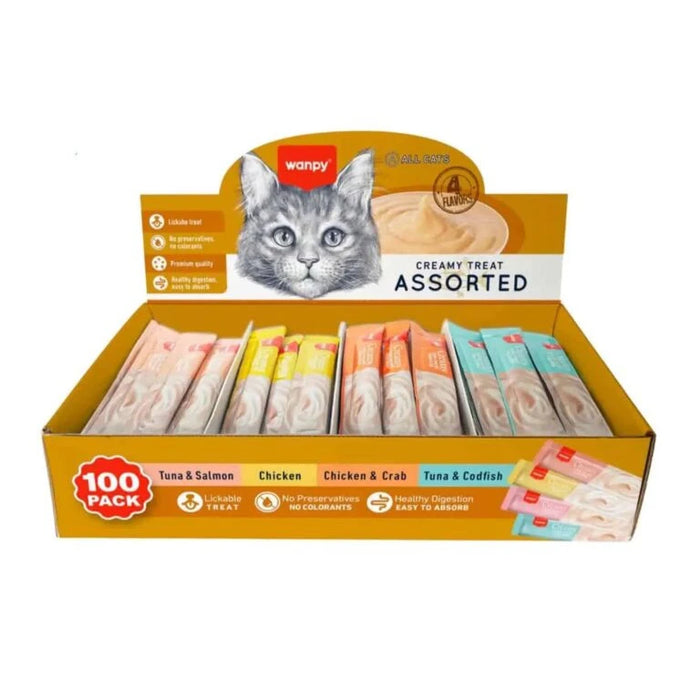
Lickable treats work particularly well here, because a cat concentrating on a treat holds still without being restrained. Options are in the cat range.
Front paws first
Front claws grow faster, do most of the damage to furniture and are easier to reach. If you only manage the front paws, you have done the most useful part.
Back claws often need less frequent attention, though they should still be checked.
If your cat will not tolerate it
Some cats will not, and forcing it makes every future attempt worse. A groomer or vet nurse can do it quickly, and watching once is a good way to learn the handling.
It is not a failure to outsource this. A cat that has been held down and hurt remembers it.
What If You Cut the Quick?
It happens to almost everyone eventually, and it looks worse than it is.
- Stay calm. Your reaction tells the cat how serious this is
- Apply gentle pressure with a clean cloth or gauze
- A styptic product made for the purpose stops bleeding quickly if you have one
- Keep the cat calm and still for a few minutes rather than chasing it
- Stop the session. Do not carry on to the next claw
- Contact a vet if bleeding does not stop, or if the claw looks damaged rather than just short
Watch the paw over the following days. Limping, swelling, or continued licking is a vet question.
How Often Do Cats Need Their Claws Trimmed?
It varies more than most guides admit, because it depends on how much the cat wears its own claws down.
- Indoor cats generally need trimming every few weeks
- Cats with access to outdoors often wear claws down naturally and need less
- Older or arthritic cats tend to need more help, since they scratch less and claws can overgrow
- Very young kittens have needle-sharp claws that benefit from tip trimming
The check that beats any schedule: listen. If you can hear claws clicking on hard floors, or they catch in bedding and fabric, they are long.
Overgrown claws are a real problem
Left too long, a cat's claw can curve round and grow into the pad. This is painful, becomes infected, and is far more common in elderly cats who no longer scratch much.
If you have an older cat, check the claws regularly even if trimming is difficult. This is worth a vet visit rather than leaving it.
Scratching Posts Do Half the Work
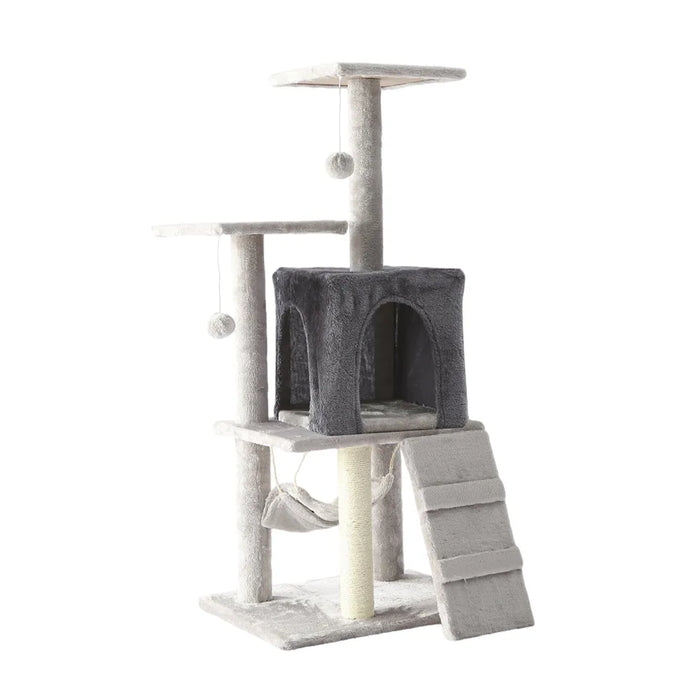
Scratching is not sharpening. It removes the worn outer sheath of the claw, revealing the newer one underneath, and it stretches the cat.
A cat with good scratching options keeps its front claws in better condition and needs less trimming. A cat with none takes it out on your sofa.
- Height matters. A post should let the cat stretch fully upright
- Stability matters more. A wobbly post gets abandoned
- Sisal is popular because the texture suits scratching better than carpet
- Placement decides use. Put it where the cat already scratches, not where it looks tidy
- Offer both vertical and horizontal options, since cats differ
Posts and towers are in the cat supplies range.
Why Declawing Is Not an Alternative
This comes up often enough in searches to be worth answering directly.
Declawing is not the removal of a nail. It is the surgical amputation of the last bone of each toe, which is where the claw grows from. It is a significant procedure, not a grooming shortcut.
It can lead to lasting pain, changes in how a cat walks, and behavioural problems including litter tray avoidance and biting, since a cat without claws has lost its primary defence.
Trimming, scratching posts and patience address the same problem without surgery. If scratching is causing real difficulty at home, a vet or behaviourist is a better first call.
What to Check While You Have the Paw
Trimming is a rare moment when you have a cat's foot in your hand, so use it.
- Pads, for cracks, cuts or soreness
- Between the toes, where matting and debris collect in long-haired cats
- Claw beds, for swelling or discharge
- Any claw growing at an odd angle or curling toward the pad
- Signs of parasites, particularly in cats with outdoor access
Ticks attach in places that are easy to miss, including between the toes. Our guide on finding ticks on a pet covers what to look for and how to tell one from a skin lump.
Paw and skin care products are in the pet care range.
Make it part of a wider routine
Cats that are handled regularly are far easier to treat when something is actually wrong. Brushing, paw handling and claw checks all build the same tolerance.
Our guide on why routine pet care matters covers how these habits fit together.
Long-haired cats need the most handling of all, since matting forms between the toes as well as on the body. Brushes and coat products are in the grooming range.
Diet affects coat and shedding more than most owners expect, and our guide on cat food and shedding covers that side.
What We Stock, and What We Do Not
Being straight, since you arrived looking for clippers.
We do not stock cat nail clippers, grinders or trimmers. We carry cat food, litter, treats, scratching posts, beds and coat care.
For clippers, you will need a pet retailer that carries grooming tools or a veterinary clinic, and most vets will sell or recommend a pair. We would rather say that than sell you something unsuitable.
If you are new to cats generally, our guide to cat adoption in Dubai covers the first weeks, including handling and vet visits.
About Woofy
We are a licensed Dubai business operating from Dubai Industrial City, registered under DET licence 1558950 and Dubai Chamber of Commerce membership 645603. More about us is on our story page.
We sell pet food and supplies. Nothing here replaces veterinary advice, and anything involving bleeding, injury or an overgrown claw that has reached the pad is a vet matter rather than a home one.
What Woofy Customers Say
These are real Google reviews from customers who have ordered from us:
Najma Sharaf described the range of pet food and supplies as good quality, said products arrived authentic and well packaged, and found the ordering process smooth.
Gee B noted the order arrived much faster than expected, with everything packed neatly and in perfect condition.
Both cover the ordering and delivery experience rather than any particular product.
Final Thoughts on Using Cat Nail Clippers
Buy a sharp scissor-style pair, cut only the clear tip, and do one or two claws at a time. That is most of it.
The cat's tolerance is the thing you are really managing. Stopping early while everything is calm makes the next session easier, and rushing to finish makes every future attempt harder.
Give your cat somewhere proper to scratch, and you will be reaching for the clippers less often, which suits everyone.
Sorting the rest of the routine? Browse the cat range for food, litter, treats and scratching posts.
Questions about food or care for your cat? Talk to our team