
 Whatsapp Us

One. The same as every other animal, including the people who repeat the saying.
If you are asking how many lives does a cat have, the honest answer is one, and the more interesting question is why so many cultures decided otherwise. The myth exists because cats survive things that should kill them, and there is real biology behind that.
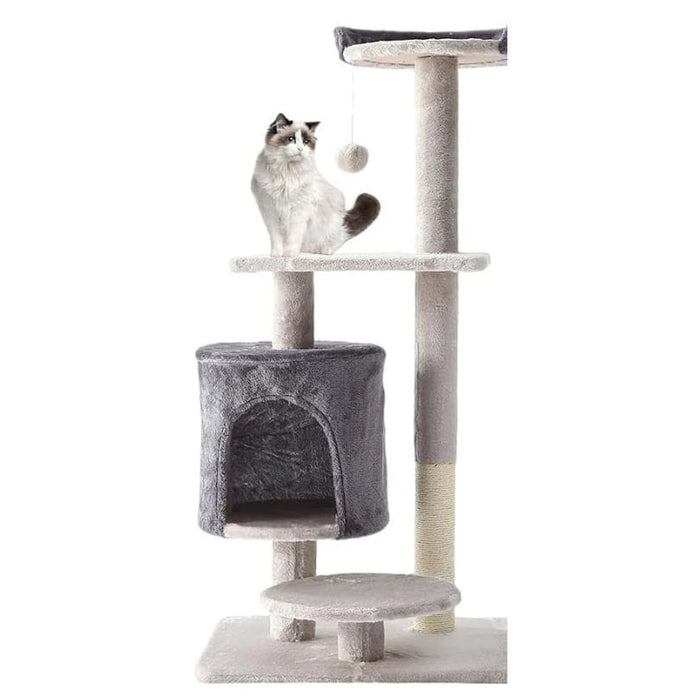
Safe indoor height is the practical answer to most of this, and climbing furniture is in the cat supplies range.
There is also a genuine risk hidden inside the saying, and it matters more here than in most places. This guide covers where the myth came from, the physics of why cats survive falls, and why believing the legend gets cats hurt in high-rise cities.
Cats have one life. The nine lives idea is folklore, not biology.
The myth comes from the righting reflex, which lets cats rotate mid-air and land feet first, so they walk away from falls that would injure most animals.
Surviving a fall is not the same as being unharmed. Vets treat a recognized pattern of injuries from falls from windows and balconies.
The number varies by culture. Nine in much of the English-speaking world, seven in several European countries, six in parts of the Arab world.
The practical point: screen your windows and balconies. The myth makes owners relaxed about heights, and in a city of towers that is a genuine hazard.
Where the Nine Lives Myth Came From
Nobody knows for certain, which is worth saying plainly since many articles state one origin as fact.
The explanations usually offered are these:
- Ancient Egypt, where cats were revered and associated with deities, giving them a supernatural reputation that persisted
- Number symbolism, with nine treated as a mystical or lucky number in several traditions
- Observation, the simplest explanation: people watched cats survive falls, fights and accidents and concluded something unusual was going on
- Folklore and superstition, which attached mystery to cats in many cultures, not always favorably
The observational explanation is the one with evidence behind it. Cats genuinely do survive incidents that would seriously injure other animals of similar size, and the reason is anatomical rather than mystical.
The number is not nine everywhere
| Region or language | Number of lives |
|---|---|
| English-speaking countries | Nine |
| Spain, Germany, Greece and others | Seven |
| Parts of the Arab world | Six |
| Turkey and some Persian traditions | Seven |
The variation is itself the clue. A biological fact would not change by country. A story shaped by local number symbolism would, and does.
The Real Reason Cats Survive Falls
This is the part worth knowing, because it is genuinely remarkable and because it explains the misunderstanding.
Cats have a righting reflex, an automatic sequence that lets them rotate in mid-air to land feet first. It develops in kittens within the first few weeks of life.
Three features make it work:
- The vestibular system in the inner ear, which tells the cat which way is down almost instantly
- An unusually flexible spine, allowing the front and back halves of the body to rotate independently
- No functional collarbone, which gives the shoulders and forelimbs a wide range of movement and helps absorb impact
Cats also have a low body weight relative to surface area, so they reach a lower terminal velocity than a heavier animal would. Spreading their limbs increases drag further, which is why falling cats often flatten out.
Why this creates a false impression
People see cats survive falls and conclude cats are indestructible. What they do not see is the rest of the picture.
Cats that are seriously injured in falls are carried to a vet, not photographed walking away. Cats that die on impact never reach a clinic at all. The survivors are simply the visible group, which is exactly how a myth builds.
That selection effect matters when you read survival statistics about falling cats. Figures drawn only from cats brought in for treatment cannot tell you how many did not make it, so they look far more reassuring than reality.
Why the Myth Is Actually Dangerous
Here is the part that matters practically, and it applies to Dubai more than to most places.
Vets recognize a pattern of injuries in cats that fall from windows and balconies, common enough that it has its own name in veterinary practice. Typical injuries include broken limbs, facial and jaw fractures from impact, chest injuries and internal damage.
The myth encourages a relaxed attitude to open windows and unscreened balconies. In a city where most cats live several floors up, that relaxed attitude is the whole problem.
What actually makes cats fall
- Hunting focus, where a bird or insect takes all of the cat's attention and it misjudges the edge
- Sleeping on a ledge and shifting position while asleep
- Loose or unsecured screens, which give way when leaned against
- Startling, from a loud noise or another animal
- Overestimating a jump between surfaces at height
Cats are not afraid of heights in the way people are. They are comfortable on narrow ledges, which is precisely why they end up on them.
Making a high-rise home safe
- Screen every window your cat can access, with mesh fixed securely rather than propped
- Check screens regularly, since a determined cat will find a loose corner
- Never rely on a tilt-open window, which can trap a cat attempting to squeeze through
- Net or enclose balconies if your cat has access
- Supervise open doors during deliveries and cleaning
- Give safe height indoors, since the instinct to climb does not go away
That last point is the constructive one. A cat that has tall perches, shelves and a tower indoors is far less drawn to the windowsill, because the instinct is being satisfied somewhere safe rather than suppressed.
Habits set early are the easiest to keep. Our guide to cat adoption in Dubai covers setting up a safe indoor environment from the first day.
So How Long Do Cats Actually Live?
One life, and a reasonably long one if it is well looked after.
Indoor cats commonly reach their mid teens, and the late teens are not unusual with good care. Cats with free outdoor access typically live considerably shorter lives, mainly because of traffic, fights, disease and heat.
The irony is that the nine lives myth points at exactly the wrong conclusion. Cats do not survive danger repeatedly. They survive it occasionally and get hurt the rest of the time, which is why keeping them out of danger is the whole job.
What Genuinely Extends a Cat's Life
None of this is mysterious, and all of it is within your control.
- Keeping cats indoors, which is the single biggest factor
- Securing windows and balconies, the specific version of that for high-rise living
- Neutering, which reduces roaming, fighting and reproductive cancers
- Maintaining a healthy weight, since excess weight drives several serious conditions
- Feeding a complete food suited to the life stage
- Keeping vaccinations and parasite prevention current, including indoors
- Going to check-ups while the cat still seems perfectly well
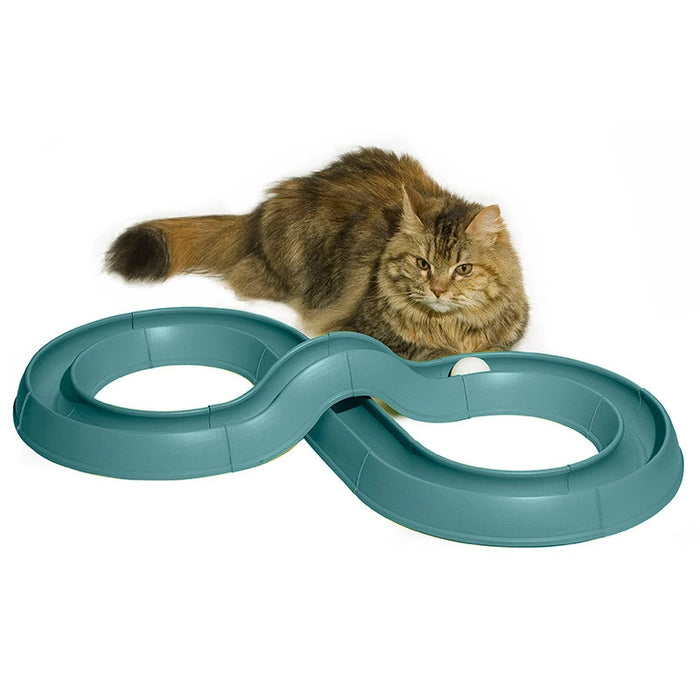
- Providing enrichment, because a bored indoor cat takes risks and gains weight
Enrichment is the one most often skipped. Play, climbing and things to chase keep an indoor cat occupied, and an occupied cat spends less time staring out of an open window.
Toys and activity items are in the cat range.
Diet, briefly
Food will not grant extra lives, but a complete diet matched to life stage supports everything else. Our guide to the best cat food covers what to compare on a label.
Hydration matters too, since cats have a weak thirst drive and many drink too little. Our guide to wet cat food covers textures and portions.
Format affects cost and storage more than nutrition, which is worth knowing before buying in bulk. Our guide to canned cat food covers that.
Other Cat Myths Worth Correcting
- Cats always land on their feet. Usually, but not always, and landing feet first does not prevent injury
- Cats can see in complete darkness. They see far better in low light than we do, but they cannot see with no light at all
- Cats are low maintenance. They need veterinary care, enrichment, grooming and attention like any other pet
- Milk is a treat for cats. Most adult cats cannot digest lactose and get an upset stomach from cow's milk
- Purring always means happiness. Cats also purr when stressed, unwell or in pain
- A cat that is eating must be fine. Cats hide illness, and appetite can persist well into a serious condition
The purring one is worth remembering. It is one of the reasons cats reach the vet later than dogs with comparable problems.
Everyday Care That Does the Real Work
Less dramatic than folklore, but this is what actually keeps cats alive and comfortable.
Litter tray habits are the most useful daily health signal you have, and changes there often appear before anything else. Our guide to choosing cat litter covers what to watch while scooping.
Claw care matters more than people expect, particularly as cats age and scratch less. Our guide to trimming a cat's claws covers doing it calmly.
Parasite prevention applies indoors as well, since fleas arrive on clothing and shoes. Our guide to flea treatments for cats covers keeping that current.
About Woofy
We are a licensed Dubai business operating from Dubai Industrial City, registered under DET licence 1558950 and Dubai Chamber of Commerce membership 645603. More about us is on our story page.
We sell pet food and supplies. Nothing here replaces veterinary advice, and a cat that has fallen from any height needs examining even if it seems unhurt.
What Woofy Customers Say
These are real Google reviews from customers who have ordered from us:
Gee B noted the order arrived much faster than expected, with everything packed neatly and in perfect condition.
Khaled Haridi praised the customer service and the care taken with packaging, and noted that delivery was fast.
Both cover the ordering and delivery experience rather than any particular product.
Final Thoughts on How Many Lives a Cat Has
One life, and a remarkable body that occasionally makes it look like more. The righting reflex is real and genuinely impressive, but it is a survival mechanism rather than a guarantee.
The useful takeaway is the opposite of the legend. Cats do not get second chances, which is why screens on windows and nets on balconies matter so much in a city built upward.
Give your cat height it can enjoy safely, keep the risky kind out of reach, and let the one life it has run as long as it should.
Setting up safe indoor height? Browse the cat supplies range for towers and climbing furniture, or the full cat range for everything else.
Not sure what suits a nervous or elderly cat? Talk to our team.