
 Whatsapp Us

Cats are particular about where they go to the toilet, and the litter is most of that decision. Change it carelessly and a previously reliable cat starts going somewhere else.
Most guides to cat litter compare products on odour control and price. Those matter, but they are the owner's priorities. The cat is judging texture underfoot, dust, smell and how deep it is, and the cat is the one who decides whether the tray gets used.
This guide covers the main litter types and who each suits, how to switch without accidents, how much to use and how often to change it, and when a litter problem is actually a health problem.
Clumping clay suits most cats and most households. It is what cats generally prefer underfoot, and it makes daily scooping simple.
Cats prefer fine-grained, unscented litter. Heavy fragrance is for humans, and strong scents put some cats off the tray entirely.
Depth matters more than people expect. Around three inches lets a cat dig and cover properly.
Switch gradually. Mix the new litter in over a week or two rather than swapping in one go, which is a common cause of accidents.
A cat that suddenly stops using the tray may be unwell rather than fussy. Straining, frequent trips or crying in the tray needs a vet the same day, particularly in male cats.
The Main Types of Cat Litter
| Type | How it works | Suits | Trade-offs |
|---|---|---|---|
| Clumping clay (bentonite) | Forms solid clumps around urine for easy removal | Most cats and most homes | Heavy to carry, can be dusty depending on grade |
| Non-clumping clay | Absorbs without clumping, so the whole tray is changed | Kittens, and owners who prefer full changes | Odour builds faster, more waste overall |
| Tofu or soybean | Plant-based pellets that clump and absorb | Lighter weight, lower dust, flushable in some cases | Larger grain, and some cats dislike the texture |
| Corn or corn cob | Plant-based clumping litter | Natural preference, low dust | Can be tracked more, and storage needs to stay dry |
| Crystal or silica | Absorbs moisture and dries solids | Low maintenance between full changes | Texture puts some cats off, and urine is not removed daily |
| Paper or wood | Pellets that absorb and break down | Post-surgery, sensitive paws, low dust needs | Weaker odour control, needs changing more often |
The practical default: a fine-grained clumping litter, unscented or lightly scented, changed daily by scooping. If your cat is happy with it, there is no reason to switch.
What cats actually prefer
Behaviour research and practical experience point the same way. Most cats prefer a fine, sand-like texture, unscented, in a decent depth, in a clean tray. That is close to what they would dig in naturally.
Where owners and cats disagree, it is usually about fragrance. A litter that smells pleasant to you can be overwhelming to an animal whose sense of smell is far more sensitive.
Unscented and natural clumping options are in the cat litter range, so it is worth trying a fine-grained one first before assuming your cat is being difficult.
Choosing Cat Litter for Your Situation
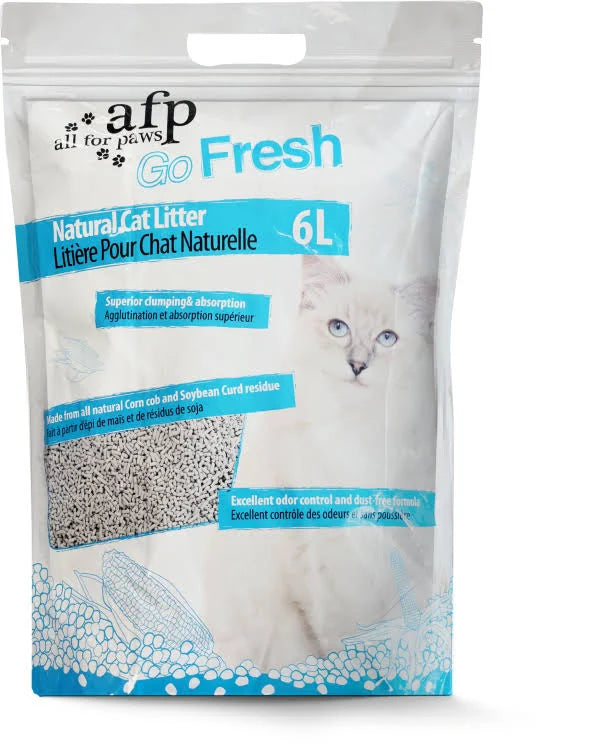
The right answer changes with the household.
- Kittens: non-clumping is often recommended for very young kittens, since they explore with their mouths. Check with your vet on timing for the switch to clumping
- Multi-cat homes: stronger odour control and more frequent scooping. The general rule is one tray per cat plus one spare
- Asthma or dust sensitivity, in cats or people: look for low-dust plant-based or paper options
- Long-haired cats: finer litter tracks less into the coat, though larger pellets scatter less on the floor
- Post-surgery or injured paws: paper pellets are gentler, and your vet may specifically recommend them
- Apartment living: odor control and low dust matter more when the tray shares your air
- Older cats: softer, finer litter is easier on arthritic joints, and lower tray sides help
Scented or unscented?
Unscented is the safer default. If odour is the problem, the answer is usually more frequent scooping or an extra tray rather than a stronger fragrance.
That said, plenty of cats accept lightly scented litter without issue. If your cat is using the tray happily, the scent is not a problem in practice.
How to Switch Cat Litter Without Accidents
This is where most litter problems start.
- Start with about a quarter new litter mixed into the existing litter
- Increase gradually over one to two weeks, watching how the cat responds
- Do not change anything else at the same time, including the tray, its position or the depth
- If the cat hesitates, slow down and hold at the previous ratio for a few more days
- Offer a second tray with the new litter if you have space, letting the cat choose
- Stop if the cat starts going elsewhere; return to the old litter and try again more slowly
Never switch abruptly during a stressful period, such as a house move, building work or a new animal arriving. Change one thing at a time.
Depth, Scooping and Full Changes
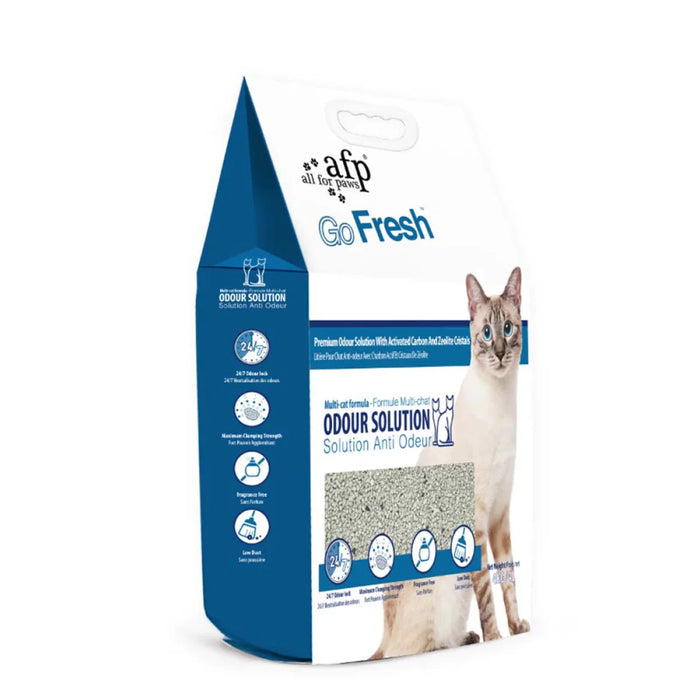
Getting these three right solves most odour complaints.
- Depth: around three inches. Too shallow and the cat cannot dig or cover; too deep and it gets pushed over the sides
- Scooping: at least once daily, twice in multi-cat homes. This does more for smell than any product
- Topping up: add fresh litter after scooping to keep the depth consistent
- Full change: for clumping litter, every few weeks depending on use. For non-clumping, considerably more often
- Washing the tray: at each full change, with mild soap and water. Avoid strong-smelling cleaners, which put cats off
A note on ammonia smell. If the tray smells strongly of ammonia despite daily scooping, the litter is saturated and needs a full change, or you need another tray.
Tray placement
Cats will avoid a tray in a bad spot regardless of the litter in it.
- Quiet and low traffic, away from washing machines and doors that bang
- Not beside food and water. Cats dislike eating next to their toilet
- Easy escape route, so the cat is not cornered
- Accessible, especially for older cats or kittens who cannot climb far
- Separate locations for multiple trays, since two trays side by side count as one to a cat
Managing Odour Without Overpowering the Cat
In apartments, particularly in a climate where windows stay shut and air conditioning recirculates, odour management matters.
- Scoop daily. Nothing else comes close
- Use enough litter so urine is absorbed rather than pooling at the base
- Add a tray rather than a stronger fragrance
- Consider activated carbon litters if odour is persistent, since carbon traps odour compounds rather than masking them
- Litter box air purifiers sit in or near the tray and reduce smell without adding fragrance the cat has to tolerate
- Ventilate the area where you can
Odour-control litters and litter box air purifiers are in the cat supplies range.
When a Litter Problem Is a Health Problem
This section matters more than the rest of the article.
A cat that suddenly stops using its tray, or changes how it uses it, may be telling you something medical. Litter preference is the last thing to suspect, not the first.
See a vet the same day if you notice:
- Straining in the tray with little or nothing produced
- Frequent trips to the tray
- Crying or obvious discomfort while urinating
- Blood in the urine or on the litter
- Urinating outside the tray when this is new behaviour
In male cats especially, straining with nothing produced can be a urinary blockage, which is a life-threatening emergency. Do not wait to see whether it resolves and do not change the litter to test a theory.
Other causes worth a vet conversation include kidney problems, diabetes, arthritis making the tray hard to enter, and stress-related cystitis.
Behavioral causes
Once a vet has ruled out illness, the usual suspects are a dirty tray, too few trays, a bad location, a recent litter change, a covered tray the cat dislikes, or stress from another animal.
Adopted cats often need patience here. Our guide to cat adoption in Dubai covers the one-room setup that helps a new cat establish tray habits from day one.
Tracking and Mess
Litter on the floor is the second most common complaint after smell.
- Larger grain litters track less but scatter more when the cat digs
- A high-sided or top-entry tray contains scatter, though some cats refuse them
- A mat outside the tray catches what comes out on paws
- Trim paw fur on long-haired cats, since litter sticks to it
- Do not overfill, which is the most common cause of litter over the sides
Long-haired cats carry more litter in their coats and between their toes, so regular grooming helps. Our guide on cat food and shedding covers coat condition from the inside.
What We Stock, and What We Do Not
Being straight about this.
We carry cat litter, including clumping clay, natural corn cob, tofu blends, activated carbon odour-control options and a litter box air purifier.
We do not currently stock litter trays, scoops, mats or liners. Those you will need elsewhere, which is worth knowing before you order.
Cat food is in the cat food range, and diet affects stool consistency, which in turn affects how easy the tray is to manage.
Beds, towers, treats and grooming items are in the cat range.
Litter and Wider Cat Health
The tray is a daily health check most owners overlook.
Scooping tells you how much a cat is urinating and whether stools look normal. Changes in either are often the earliest sign something is wrong, well before a cat looks unwell.
Worms sometimes appear in stools, which is one reason regular prevention matters even for indoor cats. Our guide to deworming medicine covers how treatment is matched to weight.
Small daily checks like this are worth more than occasional big ones. Our guide on why routine pet care matters covers how they add up.
About Woofy
We are a licensed Dubai business operating from Dubai Industrial City, registered under DET licence 1558950 and Dubai Chamber of Commerce membership 645603. More about us is on our story page.
We sell pet food and supplies, including cat litter. Nothing here replaces veterinary advice, and any sudden change in toilet habits is a vet matter rather than a product one.
What Woofy Customers Say
These are real Google reviews from customers who have ordered from us:
Najma Sharaf described the range of pet food and supplies as good quality, said products arrived authentic and well packaged, and found the ordering process smooth.
Ash Angad highlighted how smoothly the order went from placing it to receiving it, and described Woofy as a store worth trusting.
Both cover the ordering and delivery experience rather than any particular product.
Final Thoughts on Choosing Cat Litter
Start with a fine-grained clumping litter, unscented, around three inches deep, scooped daily. That combination suits most cats, and if yours is using the tray reliably, there is no reason to change anything.
When you do switch, do it slowly and change nothing else at the same time. Most litter accidents are switching accidents.
And treat any sudden change in toilet habits as a health question before a preference one. The tray is the best early warning system you have.
Restocking? Browse the cat litter range for clumping, natural and odour-control options.
Not sure which litter suits your cat or how much you need? Talk to our team.