
 Whatsapp Us

Most people asking have either just brought a puppy home or just noticed their dog slowing down. Both are reasonable moments to want a straight answer.
How long do dogs live depends more on size than on almost anything else, and the relationship runs the opposite way to most mammals. Small dogs commonly reach their mid-teens. Giant breeds often do not see ten. Same species, very different arithmetic.
This guide covers lifespan by size, what genuinely shortens it, what you control, and how to tell when a dog is entering its senior years.
Smaller dogs live longer. Toy and small breeds often reach their mid teens, while giant breeds frequently live under ten years.
Mixed breeds often do well, since they are less likely to inherit the concentrated health problems of some pedigree lines.
Weight is the single biggest thing owners control. Excess weight is linked to joint disease, diabetes and reduced mobility.
Neutering is generally associated with longer life, though the best timing varies by breed and size and is a vet conversation.
Dogs are usually considered senior from around seven, earlier for giant breeds and later for small ones.
How Long Do Dogs Live by Size?
Ranges are more honest than single numbers, because variation within each group is wide.
| Size | Typical lifespan | Considered senior from |
|---|---|---|
| Toy and small | Mid teens, sometimes longer | Around 9 to 10 years |
| Medium | Low to mid teens | Around 8 years |
| Large | Around a decade | Around 7 years |
| Giant | Often under ten years | Around 5 to 6 years |
The honest caveat: these are typical ranges, not predictions. Individual dogs vary enormously, and a dog with a chronic condition may live a shorter life despite excellent care.
Why bigger dogs live shorter lives
This is one of the odder facts in animal biology. Across species, larger animals usually live longer. Within dogs, the pattern reverses.
The pattern is well established. The explanation is still debated, with proposed factors including faster growth rates in large breeds, greater physiological strain and earlier onset of age-related disease.
Being straight about this matters, because plenty of articles state one cause as settled fact. The size relationship is reliable. The reason behind it is not fully resolved.
Do mixed breeds live longer?
Often, yes, though size still matters more. A large mixed breed will not usually outlive a small pedigree.
The advantage comes from genetic diversity. Pedigree lines can concentrate inherited conditions, while mixed parentage reduces the odds of inheriting two copies of the same problem.
If you are choosing a dog, our guide to the best dog breeds for Dubai covers which dogs cope with this climate. That is a separate question from lifespan, and just as practical.
What You Can Actually Control
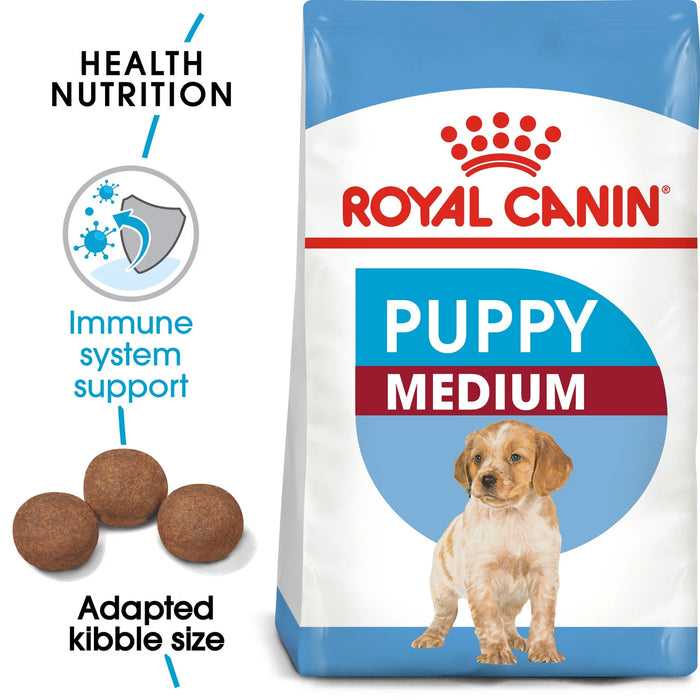
Genetics set the range. These decide where in that range your dog lands.
- Keep your dog lean. This is the single highest-impact thing most owners can change
- Feed a complete food matched to size and life stage rather than improvising
- Neuter, after discussing timing with your vet
- Keep vaccinations and parasite prevention current
- Take dental health seriously, since dental disease is common, painful and often ignored
- Exercise appropriately for the breed, age and the heat
- Attend annual check-ups, and twice yearly once your dog is senior
- Keep the mind busy, because an understimulated dog is a stressed one
Weight deserves the top spot. You should feel ribs under a light covering without pressing hard, and see a waist from above. If you cannot, portion control is worth more than any supplement.
Portioning without guesswork
- Weigh food rather than using a scoop or judging by eye
- Count treats in the daily total, keeping them to a small share of intake
- Adjust after neutering, since energy needs typically drop
- Reassess as your dog ages, because activity falls before appetite does
- Ask your vet for a calorie target if weight is already a concern
Life stage formulas are in the dog food range, from puppy through to senior.
Life Stages and What Matters at Each
| Stage | Roughly | Priorities |
|---|---|---|
| Puppy | 12 to 18 months, longer for large breeds | Growth food, vaccinations, socialization, controlled exercise |
| Adult | 1 to 7 years, varies by size | Weight control, dental care, annual checks |
| Senior | From 5 to 10, depending on size | Twice-yearly checks, joint comfort, weight, mobility |
Large-breed puppies are a special case. They grow for longer, and their joints are vulnerable during that period, so over-exercising a young large dog or feeding for maximum growth can cause lasting problems. Large-breed puppy formulas exist for that reason.
Our guide on raising puppies here covers the early months, including exercise limits while joints are still forming.
Taking on an older dog skips that stage entirely, which suits plenty of households better. Our guide to dog adoption in Dubai covers adopting at any age.
Signs Your Dog Is Getting Older
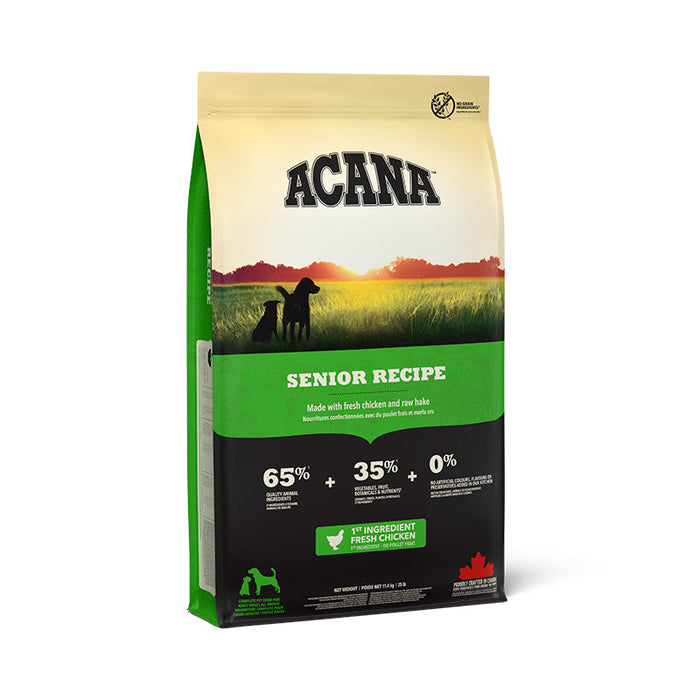
Aging is gradual, and most of these creep up rather than arriving.
- Slowing on walks or tiring sooner than before
- Stiffness after rest, particularly first thing in the morning
- Reluctance on stairs or jumping into the car
- Greying around the muzzle and eyes
- Cloudiness in the eyes, or bumping into things
- Reduced hearing, often mistaken for selective listening
- Sleeping more and playing less
- Weight change in either direction
- Night-time restlessness or confusion
Stiffness is the one owners most often write off as normal aging. Arthritis is common, painful and manageable, so it is worth raising rather than accepting.
Small changes that help an older dog
- Non-slip mats on smooth floors, which make a real difference to confidence
- A supportive bed in a quiet, draft-free spot
- Ramps or steps instead of jumping into cars or onto furniture
- Shorter, more frequent walks rather than one long one
- Raised bowls if your dog struggles to lower its head comfortably
- Keeping nails trimmed, since overgrown nails change how a dog stands
Health Problems That Shorten Lives
Knowing what to watch for is more useful than any average.
- Obesity, which drives joint disease, diabetes and heat intolerance
- Dental disease, common and frequently advanced before anyone notices
- Cancer, as in any long-lived species
- Heart disease, sometimes silent until well progressed
- Kidney disease, often showing first as increased thirst
- Arthritis, which limits activity and accelerates decline
- Heatstroke, which in this climate is a genuine year-round risk
- Bloat, a sudden, life-threatening emergency in deep-chested breeds
Bloat is worth knowing by sight. A swollen, tight abdomen with unproductive retching, restlessness and distress needs an emergency vet immediately. It kills quickly and it does not resolve on its own.
Heat is a lifespan factor here
In a hot climate, heat management is not a comfort issue but a survival one. Midday walks, hot pavement and cars are the three common causes of avoidable emergencies.
Our guide to owning a dog in Dubai covers how the climate shapes routines across the year.
Parasites and routine prevention
Unglamorous, and it matters. Worms and fleas are easy to prevent and genuinely damaging if left.
Our guide to deworming medicine covers dosing by weight and how often to repeat it.
Fleas are the other half of routine prevention, and treating the dog alone rarely solves it. Our guide on how dogs pick up fleas covers why the environment matters too.
Does Neutering Affect Lifespan?
Generally it is associated with living longer, and the reasons are specific rather than vague.
Neutering removes the risk of certain reproductive cancers, reduces roaming behavior that leads to road accidents and fights, and removes the risk of pyometra, a serious uterine infection in unspayed females.
Timing is the part worth discussing with a vet. Optimal timing varies by breed and size, particularly for large breeds where growth plates and joint development are involved. It is one of the few areas where general advice is genuinely inadequate.
Dog Years and Human Years
The old rule of multiplying by seven is a rough approximation and not very accurate.
Dogs mature fastest in their first two years, after which aging slows but varies by size. A large dog of seven is further through its life than a small dog of seven, which is why the senior threshold moves with size rather than staying fixed.
The practical takeaway is simple. Use size to judge when to increase monitoring, rather than a single conversion number.
Diet and Long-Term Health
Food will not add years by itself, but a complete diet matched to size and life stage supports everything else.
Puppies need growth formulas, adults need maintenance, and senior formulas are adjusted for older dogs. Large-breed puppy foods exist because controlled growth protects developing joints.
Digestive sensitivity often increases with age, and our guide on dog food for sensitive stomachs covers what to look for when that happens.
Coat condition is a visible marker of how things are going, and our guide on how often to bathe a dog covers the grooming side of keeping skin comfortable.
The Later Years
A short, practical note, since many people searching this are worried about a dog that is slowing down.
Plenty of dogs live comfortably for years with conditions that are managed rather than cured. Arthritis, heart disease and kidney problems are all commonly controlled with the right support.
What helps most is regular veterinary contact, so changes are caught while there are still options. Your vet is the right person to discuss quality of life with, and that conversation is easier when the relationship already exists.
About Woofy
We are a licensed Dubai business operating from Dubai Industrial City, registered under DET licence 1558950 and Dubai Chamber of Commerce membership 645603. More about us is on our story page.
We sell pet food and supplies. Nothing here replaces veterinary advice, and anything involving a change in your dog's health is a vet matter rather than something to manage at home.
What Woofy Customers Say
These are real Google reviews from customers who have ordered from us:
Ash Angad highlighted how smoothly the order went from placing it to receiving it, and described Woofy as a store worth trusting.
Najma Sharaf described the range of pet food and supplies as good quality, said products arrived authentic and well packaged, and found the ordering process smooth.
Both cover the ordering and delivery experience rather than any particular product.
Final Thoughts on How Long Dogs Live
Size sets the expectation, from mid teens for a small dog to under a decade for a giant breed. That part is largely decided before you bring a dog home.
What you control is where in that range your dog lands, and weight is the biggest lever by a distance. Lean dogs move better, suffer less joint disease and cope far better with heat.
And go to check-ups while your dog still seems fine. In a species that hides discomfort, noticing early is worth more than anything you can buy.
Feeding for the life stage? Browse the dog food range from puppy to senior, or the full dog range for everything else.
Not sure which life stage formula suits your dog? Talk to our team.