
 Whatsapp Us

The most common mistake is also the most understandable one. You bring the new cat home; you want everyone to get along, so you put them in a room together and hope.
Knowing how to introduce cats to each other properly means accepting that it is slow. Cats are territorial, and a resident cat does not experience a newcomer as company. It experiences an intruder in a territory it had already claimed.
This guide gives you the staged process, realistic timelines, the signals that tell you to move forward or back off, and the mistakes that cost weeks.
Separate them at first. The new cat gets its own room with everything it needs.
Swap scents before they ever see each other. Smell is how cats decide who belongs.
Go through a barrier next, then short supervised meetings, then full access. Each stage only when the previous one is calm.
Expect weeks, not days. Some pairs take months, and rushing is what causes lasting problems.
Duplicate the resources. One litter tray per cat plus a spare, separate food and water, and plenty of vertical space.
Before You Start
Get these in place before the new cat arrives, because retrofitting them mid-introduction is harder.
- A separate room for the new cat, with a door that closes properly
- Duplicate resources, so nobody has to share anything at first
- A vet check for the new cat, including parasite treatment, before any contact
- Vaccinations up to date for both cats
- Vertical space, which lets cats avoid each other without leaving the room
- Time. Starting the week you travel or move house is setting yourself up to fail
The vet check is not optional. Introducing a cat carrying fleas or an infection to a resident cat creates a second problem on top of the first. Our guide to flea treatments for cats covers what to have in place.
How many of everything?
| Resource | For two cats | Why |
|---|---|---|
| Litter trays | Three, in separate places | One per cat plus a spare. Two side by side count as one |
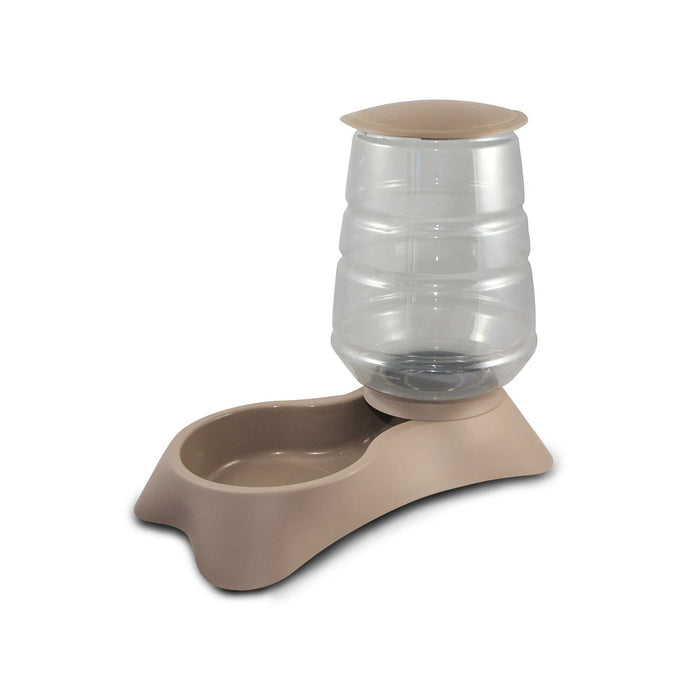
| Food bowls | Two, apart | Eating side by side creates tension early on |
| Water | Several, around the home | Away from food and trays |
| Beds and hiding spots | More than two | Cats need somewhere to retreat that is not contested |
| Scratching posts | At least two | Scratching is territorial marking as well as claw care |
| High perches | As many as you can fit | Height defuses conflict. Cats avoid by going up |
Tray placement matters as much as the number, and our guide to choosing cat litter covers depth, siting and the signs of a cat avoiding a tray.
How to Introduce Cats to Each Other: The Five Stages
Work through these in order. The timings are a guide, and the cats decide the pace.
Stage 1: Complete separation
The new cat lives in its own room with food, water, a tray, a bed and somewhere to hide. The resident cat keeps the rest of the house and its normal routine.
They should hear and smell each other without any visual contact. Give it a few days at minimum, longer if either cat is distressed.
What you are looking for: both cats eating normally, using their trays and settling. A cat that stops eating or hides constantly is not ready to progress.
Stage 2: Scent swapping
This is the stage people skip, and it is the most important one.
- Swap bedding between the two cats so each smells the other
- Rub a soft cloth gently on one cat's cheeks, then leave it where the other can investigate
- Swap rooms for short periods, letting each explore where the other has been
- Feed on opposite sides of the closed door, moving bowls closer over several days
Feeding either side of the door does real work. It pairs the other cat's smell with something good, which is the whole principle behind the process.
Back off if there is hissing at the door or either cat refuses to eat. Move the bowls further apart and try the next day again.
Stage 3: Seeing without touching
Now they see each other, with a barrier in between. A tall pet gate, a mesh screen or a door propped open a couple of inches all work.
Keep the first sessions very short, a few minutes, and end them while both cats are still calm. Feed or play on each side so the sight of the other cat comes with something positive.
Signs to continue: relaxed posture, normal blinking, grooming, eating, mild curiosity.
Signs to stop for today: flattened ears, puffed tail, crouching, growling, fixed staring, or either cat refusing food.
Stage 4: Supervised meetings
Open the barrier for short, supervised periods in a neutral space.
- Start with five or ten minutes and build gradually
- Keep both routes open, so neither cat can be cornered
- Have distractions ready, such as a wand toy or food
- Do not pick either cat up if things get tense, since that is how people get scratched
- Separate calmly using a towel or a cushion as a visual block rather than your hands
- End on a good moment, not after something goes wrong
Some hissing is normal. It is communication, not failure. Sustained growling, stalking or any physical fight means going back a stage.
Stage 5: Full access
Once supervised time is consistently calm, extend it and eventually leave them together unsupervised.
Keep the duplicate resources in place permanently. The single most common cause of long-term tension between cats is competition over trays, food and favorite spots.
How Long Does It Take?
| Situation | Typical pace |
|---|---|
| Two kittens | Often fast, sometimes days |
| Kitten joining an adult | Usually a few weeks |
| Two adults | Several weeks, often longer |
| A cat with a history of conflict | Months, and sometimes coexistence rather than friendship |
The honest version: there is no schedule. Cats that are rushed often end up worse than cats whose owners took an extra month, because a bad first encounter is remembered.
Mistakes That Set You Back
- Face to face on day one, which is the classic error
- Skipping scent swapping, removing the groundwork that makes sight tolerable
- Letting them sort it out, which teaches both cats that the other means conflict
- Holding a cat during a meeting, leaving it unable to retreat
- Punishing hissing, which adds fear without removing the cause
- Sharing a single tray or bowl to encourage bonding, which does the opposite
- Changing the resident cat's routine, adding stress on top of the newcomer
- Pushing on after a bad session rather than going back a stage
Vertical space is the cheapest fix for most of this, since cats defuse tension by going up rather than confronting. Towers and perches are in the cat supplies range.
Favour the resident cat. Keep its feeding times, sleeping spots and attention unchanged. The newcomer has no routine to lose yet, but the resident cat does.
Reading Cat Body Language
| Signal | What it usually means | Action |
|---|---|---|
| Slow blinking, relaxed body | Comfortable | Continue |
| Tail up on approach | Friendly greeting | Good sign |
| Hissing | Back off, I am uncomfortable | Normal. Shorten the session |
| Flattened ears, crouching | Fear | End the session, go back a stage |
| Puffed tail, arched back | Threatened | Separate calmly |
| Fixed staring | Challenge, often precedes a fight | Break the line of sight |
Hissing gets misread constantly. It is a warning rather than an attack, and a cat that hisses is choosing to communicate instead of lashing out.
When It Is Not Working
Some pairs take a long time, and a few never become friends. That is worth saying plainly, because most articles imply bonding is guaranteed.
Peaceful coexistence is a legitimate outcome. Two cats that ignore each other, use separate spaces and never fight are a success, even if they never curl up together.
Seek help if you see:
- Genuine fighting with injuries, rather than posturing
- One cat blocking access to trays, food or doorways
- Toileting outside the tray once the trays are adequate and clean
- A cat hiding constantly or stopping eating
- Overgrooming or hair loss in either cat
- No improvement at all after several weeks of correct staging
Start with a vet. Pain and illness cause aggression, and a cat that suddenly dislikes another cat may simply be unwell. If health is ruled out, a qualified feline behaviorist is the next step.
Litter tray avoidance deserves particular attention, since straining or frequent trips can indicate a urinary problem rather than a social one. Our guide to trimming a cat's claws also covers reducing damage during the settling period.
Keeping the Peace Long Term

Introductions do not end when the cats stop hissing. Most multi-cat tension comes from resource competition rather than genuine dislike.
- Keep the duplicate resources permanently, rather than consolidating once things settle
- Feed separately, which also lets you monitor what each cat eats
- Add vertical space wherever you can fit it
- Play with each cat individually, so attention is not something to compete over
- Watch for a bully pattern, where one cat controls access to a doorway or corridor
- Provide enrichment, since bored cats pick fights
Enrichment items and climbing furniture are in the cat supplies range.
Feeding in a multi-cat home
Separate bowls at a distance, ideally in different rooms. Cats eating within sight of each other often bolt their food or wait for the other to leave, neither of which is good.
It also lets you spot changes in appetite early, which is usually the first sign something is wrong in a multi-cat home. Our guide to the best cat food covers choosing for life stage.
Wet food complicates separate feeding slightly, since it cannot be left down. Our guide to wet cat food covers portioning and timing.
A note on hair
Two cats shed more than one, which surprises people more than it should. Our guide on getting cat hair off clothes covers the practical side.
Introducing a Cat to a Kitten, or to an Older Cat
The process is the same, with adjustments.
A kitten joining an adult is often easier, since kittens are less threatening territorially. The risk runs the other way: a boisterous kitten can harass an older cat that cannot escape. Make sure the adult has high retreats the kitten cannot reach.
An older or arthritic cat needs easy routes to its resources. If it has to jump or climb to escape, it will avoid moving instead, which creates stress.
A cat joining a household with a dog is a different process again, and needs the dog under control on a lead for the early stages rather than relying on supervision alone.
If your new cat has just been adopted, our guide to cat adoption in Dubai covers the first days before introductions begin.
About Woofy
We are a licensed Dubai business operating from Dubai Industrial City, registered under DET licence 1558950 and Dubai Chamber of Commerce membership 645603. More about us is on our story page.
We sell pet food and supplies. Nothing here replaces veterinary or professional behavioral advice, and persistent aggression between cats is worth a vet appointment rather than managing alone.
What Woofy Customers Say
These are real Google reviews from customers who have ordered from us:
Ash Angad highlighted how smoothly the order went from placing it to receiving it, and described Woofy as a store worth trusting.
Najma Sharaf described the range of pet food and supplies as good quality, said products arrived authentic and well packaged, and found the ordering process smooth.
Both cover the ordering and delivery experience rather than any particular product.
Final Thoughts on Introducing Cats
Go slower than feels necessary. Almost every introduction that goes wrong went wrong because someone opened the door too early.
Do the scent work properly, keep sessions short and positive, and go back a stage the moment either cat tells you it has had enough.
And duplicate everything. Most lasting tension between cats is not about personality at all, it is about two animals competing for one tray, one bowl or one good sleeping spot.
Setting up for a second cat? Browse the cat supplies range for bowls, bedding and climbing furniture, or the full cat range for everything else.
Not sure what a second cat needs? Talk to our team.