
 Whatsapp Us

Most owners notice it as hesitation. The dog stands at the bottom of the stairs a second longer than usual, or takes two attempts to get into the car, and it gets written off as slowing down with age.
Arthritis is not simply aging. It is joint inflammation that causes real, ongoing pain, and the good news is that a lot of what helps does not come from a bottle. Knowing how to help a dog with arthritis starts with your floors, your dog's weight and your walking routine, long before you get to supplements.
This guide covers how to spot it early, the home changes that make the biggest difference, how to exercise a stiff dog without making things worse, an honest look at what supplements actually do, and the one mistake that sends dogs to emergency vets.
Quick Answer
Get a diagnosis first. Stiffness has several possible causes, and some of them are urgent.
Keeping your dog lean is the single most effective thing you control. Extra weight loads already painful joints every step of the day.
Fix your flooring. Polished tile and marble are common in UAE homes and they are the worst surface for a dog that has lost grip confidence.
Exercise little and often rather than one long walk. Swimming is excellent because it removes load from the joints.
Never give human painkillers. Ibuprofen and paracetamol are dangerous to dogs and this causes real emergencies.
How to Tell If Your Dog Has Arthritis
Dogs are very good at hiding pain, so it rarely announces itself. It shows up as small changes in what your dog chooses to do.
Early signs that get missed
- Stiffness after rest, especially first thing in the morning, that eases once they get moving
- Hesitating before jumping into the car or onto the sofa, or needing a run-up
- Slowing down on walks or lagging behind on the way home
- Difficulty with stairs, particularly going down, which loads the front legs
- A changed sitting position, such as sitting with one leg out to the side
- Licking one joint repeatedly
- Irritability when touched in a particular spot, or when picked up
- Panting at rest in a cool room, which is a common and overlooked pain signal
- Muscle loss over the hindquarters, because painful legs get used less
- Sleeping more and showing less interest in play
The pattern that matters most is reluctance rather than inability. A dog that can still jump but chooses not to is usually telling you it hurts.
What else it could be
This is why self-diagnosis is a bad idea. Several conditions look almost identical from the outside.
- Cruciate ligament injury, which often appears suddenly after a twist
- Hip or elbow dysplasia, a developmental problem that can show up young
- Spinal disease, which can cause weakness and wobbliness rather than simple stiffness
- Soft tissue injury from a knock or a slip
- Bone cancer, which is uncommon but serious and typically causes rapidly worsening lameness
- Tick-borne illness, which can cause shifting joint pain
That last one is worth knowing about here, since ticks are a year-round problem in this climate. Our guide on checking your dog for ticks covers what to look for.
Sudden, severe or rapidly worsening lameness is not something to manage at home. That is a same-week vet appointment at minimum, and same-day if your dog cannot bear weight.
Get a Diagnosis Before You Change Anything
A vet can feel the joints for pain, swelling and reduced range of motion, watch your dog walk, and take X-rays if needed. That matters because the plan for arthritis is different from the plan for a torn ligament, and getting it wrong wastes months.
Bring specifics. Most owners describe their dog as "a bit stiff", which is hard to work with.
- When it started and whether it has worsened
- When it is worst, such as mornings, after rest, or after long walks
- Which legs seem affected, and whether that changes
- What your dog has stopped doing voluntarily
- A phone video of your dog walking and getting up, which is often more useful than anything you can describe
That video is the single most useful thing you can bring. Dogs frequently look fine in the consult room after an exciting car ride, and the footage shows what you actually see at home.
How to Help a Dog With Arthritis at Home
These are the changes that make a daily difference, roughly in order of impact.
Weight is the biggest lever you have
Every extra kilogram loads joints that already hurt, thousands of times a day. Weight loss is not a cosmetic goal here, it is pain management, and it is free.
You should be able to feel the ribs under a light covering without pressing, and see a waist looking down from above. If you cannot, that is where to start.
- Weigh the food rather than using a scoop or judging by eye
- Count treats in the daily total, since they add up invisibly
- Ask your vet for a target weight and a calorie figure rather than guessing
- Reassess monthly using body condition rather than the number alone
- Expect it to be slow. Gradual loss is safer and holds better
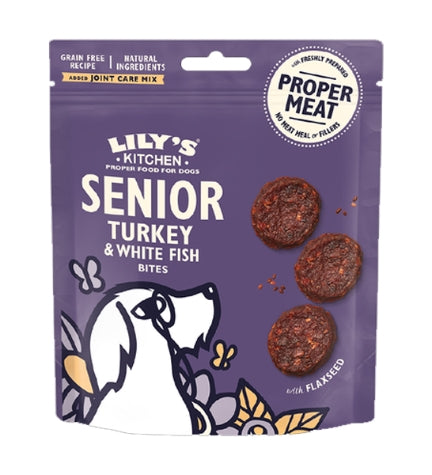
Lower calorie density makes this easier, because your dog still eats a satisfying volume. Light and senior formulas are in the dog food range.
Fix your floors, which matters more here than almost anywhere
Most arthritis advice is written for homes with carpet. UAE homes are mostly polished tile, marble or stone, and that is the worst possible surface for a dog with sore joints.
A dog that slips once becomes hesitant. A hesitant dog braces and moves stiffly, which loads the joints harder and builds anxiety about ordinary movement. The slip itself can also cause a genuine injury.
- Lay runners or rugs along the routes your dog uses most, between bed, bowls and the door
- Put a mat at the bottom of any stairs and at the point where they turn corners
- Add grip where they get up, since standing from lying is the hardest movement
- Keep paw fur trimmed between the pads, because long fur on tile is like socks on a wooden floor
- Keep nails short, as overgrown nails change how a dog stands and reduce grip
This is the cheapest high-impact change on the list. A few rugs often does more for a stiff dog than anything you can buy in a bottle.
Warmth, and the air conditioning problem
Cold stiffens arthritic joints. In cooler countries that means drafty rooms. Here it means sitting directly under an air conditioning vent, which plenty of dogs do by choice because they are warm.
Move the bed out of the direct airflow rather than turning the cooling off. You want your dog comfortable in temperature without cold air blowing onto the joints for hours.
- A thick, supportive bed rather than a thin pad on hard floor
- Placed away from vents and out of direct drafts
- Easy to step into, with low or no raised sides
- In a quiet spot so your dog is not disturbed and forced up repeatedly
- More than one bed if your home has levels, so your dog does not have to travel to rest
Bedding and daily essentials are in the dog supplies range.
Reduce the height your dog has to deal with
- A ramp or steps for the car and the sofa, if your dog is allowed on it
- Raised food and water bowls, so your dog is not reaching down with a stiff neck and shoulders
- Block access to stairs where you reasonably can, particularly going down
- Lift carefully, supporting the chest and hindquarters rather than under the belly
Grooming becomes your job
A stiff dog cannot twist to reach its back, hips and base of the tail, which is exactly where mats form first. Mats pull on the skin constantly, which adds discomfort to a dog that is already sore.
Brush those areas yourself more often than you used to. Our guide on removing matted dog hair covers doing it without hurting the skin.
Work in short sessions rather than one long one, and let your dog lie down for it instead of standing. Holding a position is tiring for sore joints, and a dog that associates grooming with discomfort becomes harder to handle each time.
Bathing needs care too, since a wet tiled bathroom is slippery. Put a towel or mat down first, and our guide on how often to bathe a dog covers frequency by coat type.
Exercise: Little, Often, and Low Impact
This is where owners most often go wrong in both directions.
Rest alone makes arthritis worse. Muscle supports the joint, and muscle lost to inactivity means the joint carries more of the load. But one long weekend walk after a quiet week is equally bad, because the dog pays for it over the following days.
The principle is consistency over intensity. Several short walks daily beat one long one, every time.
- Shorter, more frequent walks, adjusted to what your dog manages comfortably
- Steady surfaces such as grass or packed sand rather than loose or uneven ground
- Avoid sudden twists and jumps, which means rethinking ball throwing and frisbee
- Warm up gently with a slow first few minutes rather than setting off at pace
- Watch the day after. If your dog is stiffer, the walk was too much
- Keep a routine, since arthritic dogs do noticeably better with predictable daily movement
Swimming is the best exercise available
Water supports body weight, so the muscles work while the joints are unloaded. For a dog that struggles on land, it is hard to beat.
Build up slowly, keep sessions short at first, and rinse the coat afterward because salt left on the skin causes irritation. Our dog beach guide covers where this works and the rinse routine.
Not every dog is a natural swimmer. Heavy-chested and flat-faced breeds can struggle, so never assume, and never let a dog out of its depth unsupervised.
The heat makes this harder
Walking at cooler times is already the rule here, and it matters more with arthritis, because an uncomfortable dog in the heat will cut the walk short and lose condition.
Early morning and late evening work best, and our guide to owning a dog in Dubai covers how the climate shapes routines through the year.
For the hottest months, indoor options keep the routine going. Our guide to indoor dog parks in Dubai covers the alternatives.
Diet and Supplements, Honestly
Food will not cure arthritis. What it can do is keep your dog at a weight that reduces joint load, which is the part that genuinely matters.
Senior and light formulas are built around that, with lower energy density so your dog eats a satisfying volume without the calories.
Digestion often becomes more sensitive with age, which narrows the options further. Our guide on dog food for sensitive stomachs covers choosing when that is also a factor.
Omega-3 fatty acids
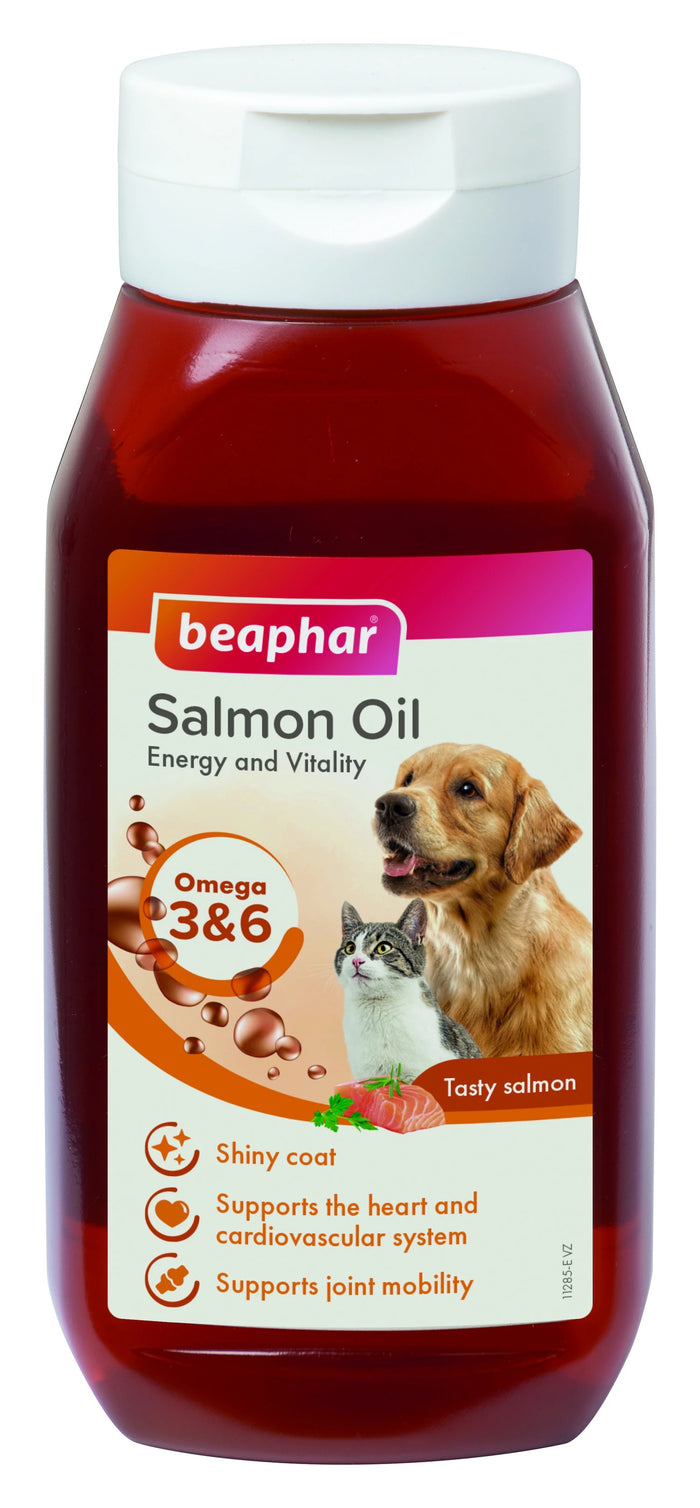
Of the commonly used supplements, omega-3 from marine sources has the most supporting evidence behind it, through an anti-inflammatory effect. It is also the one most vets are comfortable recommending alongside treatment.
The salmon oil we stock states on its own label that it supports joint mobility alongside coat and heart condition, and lists omega-3 and omega-6.
Two practical cautions. Oils are calorie dense, so count them in the daily total rather than adding them on top, which undoes the weight work. And check with your vet before starting, particularly if your dog is on medication, since omega-3 can affect clotting.
Glucosamine and chondroitin
These are the best known joint supplements and the evidence for them is genuinely mixed. Some studies show modest benefit, others show little, and quality varies widely between products.
Being straight about it: they are generally considered safe, some owners report improvement, and they are not a substitute for weight control, appropriate exercise or veterinary treatment. If you want to try them, discuss it with your vet and give it a reasonable trial period rather than switching products every few weeks.
Treat supplements as support around a plan, not as the plan. No supplement outperforms getting a heavy dog down to a healthy weight.
Never Give Human Painkillers
This section exists because it is the mistake that causes real emergencies, and it comes from owners trying to help.
Do not give your dog ibuprofen, paracetamol, acetaminophen, aspirin or any other human pain medication. Dogs process these very differently from people. They can cause stomach ulceration, kidney damage and liver damage, and they can be fatal.
The same applies to medication prescribed for another dog, including a previous pet. Doses are set by weight and condition, and an old packet in a drawer is not a safe shortcut.
If your dog has already been given a human painkiller, call a vet immediately with the name of the drug, roughly how much and when. Do not wait for symptoms.
Veterinary pain relief for dogs exists, works well and is safe when correctly prescribed. That is the route to take.
What Your Vet Can Offer
Arthritis is managed rather than cured, and management is more effective than most owners expect.
- Prescription pain relief, matched to your dog and reviewed regularly
- A structured weight plan with target and follow-up weigh-ins
- Physiotherapy and hydrotherapy, which build supporting muscle safely
- Joint injections in some cases
- Surgery, where there is a specific structural problem to correct
- Regular monitoring, since arthritis changes over time and the plan should change with it
Do not stop or adjust prescribed medication on your own, including when your dog seems better. Improvement usually means the treatment is working rather than that it is no longer needed.
A Simple Daily Routine
| When | What helps |
|---|---|
| Morning | Let your dog wake and move before expecting anything. Short, gentle walk rather than straight into pace |
| Through the day | Several short movements rather than long rest followed by exertion |
| Mealtimes | Weighed portions, raised bowls, treats counted in the total |
| Evening | The longer walk if there is one, at a cooler hour, on steady ground |
| Night | Supportive bed away from air conditioning drafts, with grip on the floor beside it |
| Weekly | Brush the areas your dog can no longer reach, check nail length, note any change |
When to Call the Vet
- Sudden or severe lameness, or inability to bear weight on a leg
- Rapid worsening over days rather than months
- Crying out when moving or being touched
- Loss of appetite alongside stiffness
- Weakness, wobbliness or dragging a paw, which can indicate a spinal problem
- Any swelling or heat over a joint
- A dog that stops getting up or has accidents because it cannot reach outside
- Medication that stops working as well as it did
Quality of life is the real measure, and your vet is the right person to review it with. That conversation is far easier when the relationship already exists, which is one more argument for regular check-ups rather than only going when something is wrong.
If you are taking on an older dog, our guide to dog adoption in Dubai covers what to ask about existing conditions before you commit.
At the other end of a dog's life, how a large breed puppy is fed and exercised affects the joints it will have at ten. Our guide on raising puppies here covers controlled growth.
About Woofy
We are a licensed Dubai business operating from Dubai Industrial City, registered under DET licence 1558950 and Dubai Chamber of Commerce membership 645603. More about us is on our story page.
We sell pet food and supplies. Nothing here replaces veterinary advice, and arthritis needs a diagnosis and a treatment plan from a vet rather than home management alone.
What Woofy Customers Say
These are real Google reviews from customers who have ordered from us:
Najma Sharaf described the range of pet food and supplies as good quality, said products arrived authentic and well packaged, and found the ordering process smooth.
Khaled Haridi praised the customer service and the care taken with packaging, and noted that delivery was fast.
Both cover the ordering and delivery experience rather than any particular product..
Final Thoughts on Helping a Dog With Arthritis
The things that help most are unglamorous. Rugs on tile floors, weighed meals, shorter walks taken more often, and a bed that is not under the air conditioning.
Get the diagnosis first, because stiffness has several causes and the treatment plans are not interchangeable. Then work on weight, because nothing else you do will match it.
And leave the medicine cabinet alone. Human painkillers are the one genuinely dangerous mistake in all of this, and veterinary options work well.
Supporting an older dog? Browse the dog supplies range for bedding and daily essentials, or the full dog range for food and supplements.
Not sure which food suits a dog that needs to lose weight? Talk to our team.