
 Whatsapp Us

Your cat is on the counter again, inspecting dinner. Some of what is up there is harmless, some is pointless, and a few things could put it in an emergency vet appointment.
Knowing what human food cats can eat comes down to three groups: foods that are safe in small amounts, foods that are not harmful but offer nothing, and foods that are genuinely toxic. The third group is shorter than people expect, but it matters far more than the rest.
This guide gives you the lists, the sensible amounts, and the specific reasons behind each warning, so you are not just memorizing rules.
Plain cooked meat and fish are the safest human foods for cats. No oil, no seasoning, no bones.
Onion, garlic, chives and leeks are the toxic foods most cats actually encounter, because they hide in stocks, gravies and leftovers rather than being fed deliberately.
Grapes, raisins, chocolate, caffeine, alcohol and xylitol are all seriously dangerous and warrant a vet call rather than watchful waiting.
Cats are obligate carnivores. They need nutrients found in animal tissue, so vegetables and grains are padding rather than nutrition for them.
Keep all extras to roughly ten percent of daily intake. The complete food does the actual work.
Human Foods Cats Can Eat Safely
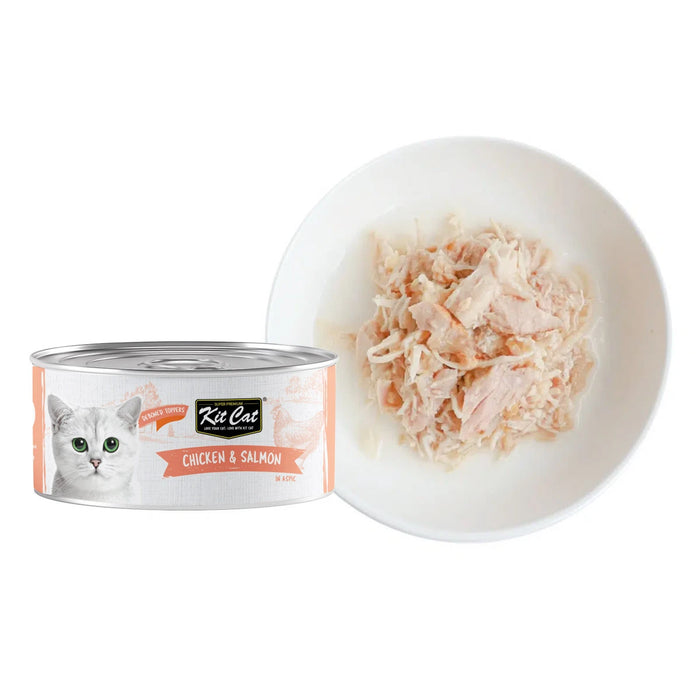
All of these should be plain, cooked and offered in small amounts.
| Food | How to serve | Notes |
|---|---|---|
| Cooked chicken or turkey | Plain, skinless, boneless, no seasoning | The safest option. Most cats love it |
| Cooked beef or lamb | Lean, plain, no fat trimmings | Fine occasionally. Fat can cause upset |
| Cooked fish | Boneless, plain, not fried | Salmon and white fish suit cats well |
| Cooked egg | Scrambled or boiled, no butter or salt | Good protein. Never raw |
| Plain cooked pumpkin | Small spoonful, no spices | Sometimes suggested for digestion. Ask your vet first |
| Small amounts of cucumber or melon | Seedless, cut small | Harmless, though most cats ignore them |
The rule that covers almost everything: if it is plain, cooked, boneless and unseasoned, it is probably fine in a small amount. The moment oil, salt, butter, sauce or stock is involved, it is not.
Tuna deserves its own note
Cats adore tuna, which is exactly why it causes problems.
Tuna is fine as an occasional treat but is not suitable as a regular food. It does not provide balanced nutrition for a cat, larger predatory fish can accumulate mercury, and some cats become so fixated on it that they refuse their proper food afterward.
If you offer it, choose tuna in spring water rather than brine, since salt is the issue, and keep it genuinely occasional.
Foods That Are Not Toxic but Pointless
These will not hurt your cat. They also do nothing for it.
- Bread and rice, which cats digest poorly and gain little from
- Most vegetables, since cats lack the digestive setup to extract much from plant matter
- Fruit, which cats cannot even taste as sweet
- Plain pasta, harmless but empty calories
- Cheese, which many cats cannot digest well, for the same reason as milk
Dairy sits in this group too for most cats, since the ability to digest lactose fades after kittenhood. The cat food range covers what does meet their needs instead.
Why this matters: cats are obligate carnivores. They require nutrients such as taurine that come from animal tissue, and their bodies are built around meat rather than mixed diets. Filling them with carbohydrate displaces the food that actually meets their needs.
Human Foods That Are Dangerous for Cats
This is the section worth reading twice.
| Food | Why it is dangerous | What to do |
|---|---|---|
| Onion, garlic, chives, leeks | Damage red blood cells, causing anemia. Cooked, raw and powdered all count | Vet, even for small amounts |
| Grapes and raisins | Linked to kidney failure | Vet immediately |
| Chocolate | Theobromine and caffeine are toxic to cats | Vet immediately |
| Caffeine | Coffee, tea, energy drinks all affect the heart and nervous system | Vet immediately |
| Alcohol | Dangerous in very small quantities for a cat's size | Vet immediately |
| Xylitol | Sweetener in sugar-free products and some peanut butters | Vet immediately |
| Raw dough | Expands in the stomach and ferments into alcohol | Vet immediately |
| Cooked bones | Splinter and can perforate the gut | Vet if swallowed |
Onion and garlic are the practical risk
Most cats never get offered a grape. Almost every cat lives in a kitchen where onion and garlic are used daily.
They appear in stock cubes, gravies, curries, pasta sauces, baby food and the juices at the bottom of a roasting tin. A spoonful of leftover sauce is a far more likely exposure than a deliberate feed.
Signs to watch for include lethargy, pale gums, rapid breathing, weakness and reduced appetite, which can appear a day or more after eating. If you know your cat has eaten something containing onion or garlic, call your vet rather than waiting for symptoms.
Raw Food Questions
Three specific risks, each with a clear mechanism.
- Raw fish contains thiaminase, an enzyme that destroys thiamine. Regular feeding can cause a deficiency with neurological consequences
- Raw egg white contains avidin, which binds biotin and can cause a deficiency over time. Raw eggs also carry a salmonella risk
- Raw meat carries bacterial risk for both the cat and the household handling it
Cooking solves all three. If you are considering a raw diet as a deliberate choice, that is a conversation to have with your vet rather than something to improvise from leftovers.
How Much Is Too Much?
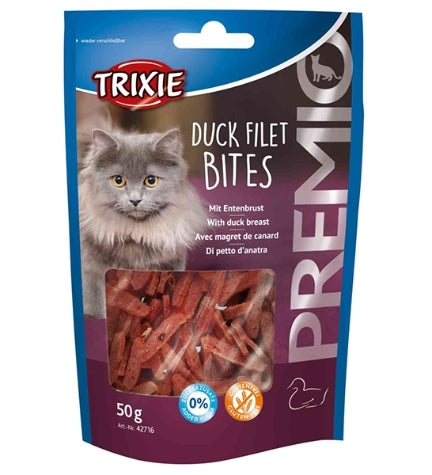
The widely used veterinary guideline is that treats of all kinds should make up around ten percent of daily intake, with the rest from complete food.
Human food counts toward that ten percent, as does everything else you hand over. The problem with table scraps is not usually the food itself but that nobody tracks them.
- Offer one food at a time, so you know what caused any reaction
- Start with a very small piece and wait a day
- Reduce the main meal if you are adding extras regularly
- Do not feed from the table, which teaches begging rather than patience
- Tell everyone in the house what the rules are, since one person undoes them easily
Purpose-made treats are easier to control because they come with a stated size and guideline. The cat range covers treats alongside food and everyday essentials.
Cats on Special Diets
If your cat is on a prescription, elimination or weight-management diet, the answer to human food is no, regardless of what is on the safe list.
An elimination diet only works if nothing else goes in, and one piece of chicken from a visitor resets weeks of progress.
Our guide on hypoallergenic cat food covers how elimination feeding works and why it takes weeks.
Ordinary digestive sensitivity is a different problem with a different fix. Our guide on cat food for sensitive stomachs covers what to look for there.
If your cat reacts to something
Mild digestive upset after a new food usually settles within a day. Stop offering it and keep water available.
Call a vet for repeated vomiting, diarrhea lasting more than a day, blood in stools, lethargy, pale gums, swelling around the face, or any suspicion that a toxic food was involved.
Litter tray changes are often the first visible sign something is wrong, which our guide to choosing cat litter covers in the context of daily monitoring.
Why the Complete Food Matters More
Human food is a treat, not a diet. A complete cat food is formulated to provide everything a cat needs, including taurine, which cats cannot produce in sufficient quantity and which is found in animal tissue.
A cat fed mostly on leftovers is at genuine risk of deficiency, even if every individual item was on the safe list. The lists in this article are about what you can safely add, not what you can substitute.
For choosing the food doing the real work, our guide to the best cat food covers what to compare on a label.
Grain content is the question owners raise most often, and the answer is less clear-cut than marketing suggests. Our guide on grain-free cat food goes into it.
Keeping Unsafe Food Out of Reach
Prevention beats treatment, particularly with a species that climbs.
- Clear counters before leaving the kitchen, especially with meat or baked goods out
- Use a lidded bin, since bin raiding causes a good share of incidents
- Store chocolate and sweets in closed cupboards rather than bowls
- Do not leave drinks unattended, including coffee and alcohol
- Rinse roasting tins rather than leaving them to soak within reach
- Brief visitors and children, who are the usual source of unauthorized snacks
New cats need extra care while they learn the household routine. Our guide to cat adoption in Dubai covers settling a cat in safely.
About Woofy
We are a licensed Dubai business operating from Dubai Industrial City, registered under DET licence 1558950 and Dubai Chamber of Commerce membership 645603. More about us is on our story page.
We sell pet food and treats. Nothing here replaces veterinary advice, and anything involving a toxic food is a vet matter rather than something to manage at home.
What Woofy Customers Say
These are real Google reviews from customers who have ordered from us:
Khaled Haridi praised the customer service and the care taken with packaging, and noted that delivery was fast.
Ash Angad highlighted how smoothly the order went from placing it to receiving it, and described Woofy as a store worth trusting.
Both cover the ordering and delivery experience rather than any particular product.
Final Thoughts on What Human Food Cats Can Eat
Plain cooked meat, fish and egg are the safe answers, in small amounts and without seasoning. Everything else is either pointless or risky.
The food to be most careful about is not the dramatic one. It is onion and garlic, hiding in the sauces and leftovers a cat is realistically going to reach.
And keep the main diet doing the main job. A complete food provides what a cat needs, and human food is a small extra on top rather than a substitute.
Looking for treats that are easier to portion? Browse the cat range, or the cat food range for the complete diet.
Not sure what suits a cat on a restricted diet? Talk to our team.